 Sam Langford (March 4, 1883 - January 12, 1956) was a Black Canadian boxing standout of the early part of the 20th century. Called the "Greatest Fighter Nobody Knows," by ESPN.[1] He was rated #2 by The Ring on their list of "100 greatest punchers of all time." Langford was originally from Weymouth Falls, a small community in Nova Scotia, Canada. He was known as the "Boston Bonecrusher," "Boston Terror." Langford stood only 5 ft 6 1⁄2 and weighed 185 lbs in his prime. Langford was a boxer who fought greats from the lightweight division right up to the heavyweights, beating many champions in the process. However, he was never able to secure a world title for himself. Langford was simply to good and, as a result, was ducked by many champions. Despite the fact Langford never received his rightful chance at the heavyweight title because of Jack Johnson's refusal to risk his crown against Langford, Ring magazine founder Nat Fleischer rated Langford as one of the ten best heavyweights of all time. Langford's most memorable fights were his numerous encounters against fellow black boxers Sam McVey, Battling Jim Johnson, Joe Jeanette and Harry Wills, who all experienced similar barriers in their fighting careers. Langford defeated Lightweight Champion Joe Gans on December 8, 1903 via 15 round decision. Gans' title was not on the line, however. The two would later become good friends. Langford considered Gans the pound for pound greatest fighter of all time. He fought Jack Blackburn, trainer of the legendary Joe Louis, six times. The first three fights were draws, the fourth a decision win for Langford, the fifth another draw and the sixth a no contest. Even though Langford is often called the greatest fighter to never challenge for a world title, he had fought Welterweight Champion Barbados Joe Walcott on September 5, 1904 for his championship. The fight resulted in a draw by decision, thus Walcott retained his title. However, reports of the fight say Langford clearly outpointed the champion. Langford kept Walcott at a distance with his longer reach and used his footwork to evade all of Walcott's attacks. Langford landed lefts and rights to the jaw so effectively, Walcott was bleeding by round two and continued bleeding more after every round. Walcott was brought on one knee in the third round and the fight ended with hardly a scratch on Langford. Langford fought various contenders throughout his career. He fought welterweight Young Peter Jackson six times, winning the first two by decision, third was a draw via points, losing the fourth by technical knockout and winning the fifth and sixth bouts again by decision. Langford fought heavyweight Joe Jeannette fourteen times, losing the first by eighth round retirement, winning second by decision, third and fourth were a draw via points, winning the fifth through eighth by decision, ninth was a draw via points, winning the tenth on decision, eleventh was a draw via points, lost the twelth by decision and winning the thirteenth by seventh round knock out and fourteenth by decision (Total: 8 wins (1 KO), 2 losses (1 RT and 1 PTS) and 4 draws). He lost to future world heavyweight champion Jack Johnson on April 26, 1906 by fifthteen round decision. Johnson was 29 pound heavier than Langford. Langford had been knocked down in the sixth round. Many spectators felt Langford had won the bout. After winning their first match, Johnson repeatedly refused rematches against Langford, who was considered by some to be the most dangerous challenger for Johnson's crown, although Johnson cited Langford's inability to meet his $30,000 appearance fee.Langford eventually went completely blind and ended up penniless, living in Harlem, New York City. In 1944, a famous article was published about his plight and money was donated by fans to help Langford. Eventually funding was obtained to pay for successful eye surgery. Langford was enshrined in the Ring Boxing Hall of Fame and Canada's Sports Hall of Fame in 1955. He died a year later in Cambridge, Massachusetts, where he had been living in a private nursing home.
Monday, January 16, 2012
Sam E. Langford
Sam Langford (March 4, 1883 - January 12, 1956) was a Black Canadian boxing standout of the early part of the 20th century. Called the "Greatest Fighter Nobody Knows," by ESPN.[1] He was rated #2 by The Ring on their list of "100 greatest punchers of all time." Langford was originally from Weymouth Falls, a small community in Nova Scotia, Canada. He was known as the "Boston Bonecrusher," "Boston Terror." Langford stood only 5 ft 6 1⁄2 and weighed 185 lbs in his prime. Langford was a boxer who fought greats from the lightweight division right up to the heavyweights, beating many champions in the process. However, he was never able to secure a world title for himself. Langford was simply to good and, as a result, was ducked by many champions. Despite the fact Langford never received his rightful chance at the heavyweight title because of Jack Johnson's refusal to risk his crown against Langford, Ring magazine founder Nat Fleischer rated Langford as one of the ten best heavyweights of all time. Langford's most memorable fights were his numerous encounters against fellow black boxers Sam McVey, Battling Jim Johnson, Joe Jeanette and Harry Wills, who all experienced similar barriers in their fighting careers. Langford defeated Lightweight Champion Joe Gans on December 8, 1903 via 15 round decision. Gans' title was not on the line, however. The two would later become good friends. Langford considered Gans the pound for pound greatest fighter of all time. He fought Jack Blackburn, trainer of the legendary Joe Louis, six times. The first three fights were draws, the fourth a decision win for Langford, the fifth another draw and the sixth a no contest. Even though Langford is often called the greatest fighter to never challenge for a world title, he had fought Welterweight Champion Barbados Joe Walcott on September 5, 1904 for his championship. The fight resulted in a draw by decision, thus Walcott retained his title. However, reports of the fight say Langford clearly outpointed the champion. Langford kept Walcott at a distance with his longer reach and used his footwork to evade all of Walcott's attacks. Langford landed lefts and rights to the jaw so effectively, Walcott was bleeding by round two and continued bleeding more after every round. Walcott was brought on one knee in the third round and the fight ended with hardly a scratch on Langford. Langford fought various contenders throughout his career. He fought welterweight Young Peter Jackson six times, winning the first two by decision, third was a draw via points, losing the fourth by technical knockout and winning the fifth and sixth bouts again by decision. Langford fought heavyweight Joe Jeannette fourteen times, losing the first by eighth round retirement, winning second by decision, third and fourth were a draw via points, winning the fifth through eighth by decision, ninth was a draw via points, winning the tenth on decision, eleventh was a draw via points, lost the twelth by decision and winning the thirteenth by seventh round knock out and fourteenth by decision (Total: 8 wins (1 KO), 2 losses (1 RT and 1 PTS) and 4 draws). He lost to future world heavyweight champion Jack Johnson on April 26, 1906 by fifthteen round decision. Johnson was 29 pound heavier than Langford. Langford had been knocked down in the sixth round. Many spectators felt Langford had won the bout. After winning their first match, Johnson repeatedly refused rematches against Langford, who was considered by some to be the most dangerous challenger for Johnson's crown, although Johnson cited Langford's inability to meet his $30,000 appearance fee.Langford eventually went completely blind and ended up penniless, living in Harlem, New York City. In 1944, a famous article was published about his plight and money was donated by fans to help Langford. Eventually funding was obtained to pay for successful eye surgery. Langford was enshrined in the Ring Boxing Hall of Fame and Canada's Sports Hall of Fame in 1955. He died a year later in Cambridge, Massachusetts, where he had been living in a private nursing home.


Thomas Elkins
 Thomas Elkins designed a device that helped with the task of preserving perishable foods by way of refrigeration. At the time, the common way of accomplishing this was by placing items in a large container and surrounding them with large blocks of ice. Unfortunately, the ice generally melted very quickly and the food soon perished. Elkins' device utilized metal cooling coils which became very cold and would cool down items which they surrounded. The coils were enclosed within a container and perishable items were placed inside. The coils cooled the container to a temperature significantly lower than that inside of a room thereby keeping the perishable items cool and fresh for longer periods of time. Elkins patented this refrigerated apparatus on November 4, 1879 and had previously patented a chamber commode in 1872 and a dining, ironing table and quilting frame combined in 1870.
Otis Boykin
 Born August 29, 1920, in Dallas, Texas. After graduating high school, he attended Fisk College in Nashville, Tennessee. He graduated in 1941. That same year, he took a job as a lab assistant with the Majestic Radio and TV Corporation in Chicago, Illinois. He rose in the ranks, ultimately serving as a supervisor. He eventually took a position with the P.J. Nilsen Research Laboratories while trying to start his own business, Boykin-Fruth Incorporated. At the same time, he decided to continue his education, pursuing graduate studies at the Illinois Institute of Technology in Chicago, Illinois. He was forced to drop out in 1947, after only two years of education, because he was unable to afford tuition. Boykin, who took a special interest in working with resistors, began researching and inventing on his own. He sought and received a patent for a wire precision resistor on June 16, 1959. This resistor would later be used in radios and televisions. Two years later, he created a breakthrough device that could withstand extreme changes in temperature and pressure. The device, which was cheaper and more reliable than others on the market, came in great demand by the United States military and IBM. In 1964, Boykin moved to Paris, creating electronic innovations for a new market of customers. His most famous invention was a control unit for the pacemaker. Ironically, Boykin died in Chicago in 1982 as a result of heart failure. Upon his death, he had 26 patents to his name.
Robert S. Abott
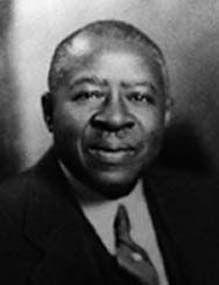 Robert S. Abbott founded the Chicago Defender as a two-cent weekly published from his landlady's kitchen and expanded it into the nation's foremost African-American publication. Born on Nov. 24, 1868 on St. Simon's Island, Ga., Abbott learned about the newspaper trade from his stepfather, who published a local paper. He attended Hampton Institute in Virginia and then enrolled in Chicago's Kent College of Law, from which he graduated in 1899. Finding it difficult to practice law due to racial discrimination, Abbott chose instead to publish a newspaper. The Chicago Defender was first published on May 5, 1905. For five years, Abbott was the Defender's sole editor, ad salesman and circulation director. He hired his first employee in 1910. By 1920, the paper's circulation exceeded 200,000 and was widely read in the North and in the South. During the 1920s and 1930s, Abbott sent reporters to cover lynchings and Jim Crow laws designed to segregate African Americans. As a result, the Defender became viewed as a radical newspaper and was banned in some parts of the South. Despite that, Abbott sent his papers south via railroad porters and waged one of his most aggressive campaigns to convince Southern Blacks to move north during World War I. His paper ran articles, editorials, cartoons even train schedules and job listings to convince the Defender's Southern readers to come north. The Great Northern Migration, as it was called in the Defender, resulted in more than one million Blacks migrating north, about 100,000 of them coming to Chicago. As the paper grew, regular contributors to the Defender included famed intellectual W.E.B. Dubois, writer Langston Hughes and Pulitzer Prize-winning poet Gwendolyn Brooks. The success of the paper made Abbott one of the first Black self-made millionaires in the country. He died on Feb. 29, 1940. Editorship of the paper was assumed by his nephew, John H. H. Sengstacke, who was handpicked by Abbott for the job.
Ida B. Wells
 Ida B. Wells was a fearless anti-lynching crusader, suffragist, women's rights advocate, journalist, and speaker. She stands as one of our nation's most uncompromising leaders and most ardent defenders of democracy. She was born in Holly Springs, Mississippi in 1862 and died in Chicago, Illinois 1931 at the age of sixty-nine.Although enslaved prior to the Civil War, her parents were able to support their seven children because her mother was a "famous" cook and her father was a skilled carpenter. When Ida was only fourteen, a tragic epidemic of Yellow Fever swept through Holly Springs and killed her parents and youngest sibling. Emblematic of the righteousness, responsibility, and fortitude that characterized her life, she kept the family together by securing a job teaching. She managed to continue her education by attending near-by Rust College. She eventually moved to Memphis to live with her aunt and help raise her youngest sisters. It was in Memphis where she first began to fight (literally) for racial and gender justice. In 1884 she was asked by the conductor of the Chesapeake & Ohio Railroad Company to give up her seat on the train to a white man and ordered her into the smoking or "Jim Crow" car, which was already crowded with other passengers. Despite the 1875 Civil Rights Act banning discrimination on the basis of race, creed, or color, in theaters, hotels, transports, and other public accommodations, several railroad companies defied this congressional mandate and racially segregated its passengers. It is important to realize that her defiant act was before Plessy v. Ferguson (1896), the U.S. Supreme Court decision that established the fallacious doctrine of "separate but equal," which constitutionalized racial segregation. Wells wrote in her autobiography: I refused, saying that the forward car [closest to the locomotive] was a smoker, and as I was in the ladies' car, I proposed to stay. . . [The conductor] tried to drag me out of the seat, but the moment he caught hold of my arm I fastened my teeth in the back of his hand. I had braced my feet against the seat in front and was holding to the back, and as he had already been badly bitten he didn't try it again by himself. He went forward and got the baggageman and another man to help him and of course they succeeded in dragging me out. Wells was forcefully removed from the train and the other passengers--all whites--applauded. When Wells returned to Memphis, she immediately hired an attorney to sue the railroad. She won her case in the local circuit courts, but the railroad company appealed to the Supreme Court of Tennessee, and it reversed the lower court's ruling. This was the first of many struggles Wells engaged, and from that moment forward, she worked tirelessly and fearlessly to overturn injustices against women and people of color. Her suit against the railroad company also sparked her career as a journalist. Many papers wanted to hear about the experiences of the 25-year-old school teacher who stood up against white supremacy. Her writing career blossomed in papers geared to African American and Christian audiences. In 1889 Wells became a partner in the Free Speech and Headlight. The paper was also owned by Rev. R. Nightingale-- the pastor of Beale Street Baptist Church. He "counseled" his large congregation to subscribe to the paper and it flourished, allowing her to leave her position as an educator. In 1892 three of her friends were lynched. Thomas Moss, Calvin McDowell, and Henry Stewart. These three men were owners of People's Grocery Company, and their small grocery had taken away customers from competing white businesses. A group of angry white men thought they would "eliminate" the competition so they attacked People's grocery, but the owners fought back, shooting one of the attackers. The owners of People's Grocery were arrested, but a lynch-mob broke into the jail, dragged them away from town, and brutally murdered all three. Again, this atrocity galvanized her mettle. She wrote in The Free Speech "The city of Memphis has demonstrated that neither character nor standing avails the Negro if he dares to protect himself against the white man or become his rival. There is nothing we can do about the lynching now, as we are out-numbered and without arms. The white mob could help itself to ammunition without pay, but the order is rigidly enforced against the selling of guns to Negroes. There is therefore only one thing left to do; save our money and leave a town which will neither protect our lives and property, nor give us a fair trial in the courts, but takes us out and murders us in cold blood when accused by white persons." Many people took the advice Wells penned in her paper and left town; other members of the Black community organized a boycott of white owned business to try to stem the terror of lynchings. Her newspaper office was destroyed as a result of the muckraking and investigative journalism she pursued after the killing of her three friends. She could not return to Memphis, so she moved to Chicago. She however continued her blistering journalistic attacks on Southern injustices, being especially active in investigating and exposing the fraudulent "reasons" given to lynch Black men, which by now had become a common occurrence. In Chicago, she helped develop numerous African American women and reform organizations, but she remained diligent in her anti-lynching crusade, writing Southern Horrors: Lynch Law in All Its Phases. She also became a tireless worker for women's suffrage, and happened to march in the famous 1913 march for universal suffrage in Washington, D.C. Not able to tolerate injustice of any kind, Ida B. Wells-Barnett, along with Jane Addams, successfully blocked the establishment of segregated schools in Chicago.
Chandler Owen
 Chandler Owen was born in Warrenton, North Carolina in 1889. He graduated from Virginia Union University in 1913. Three years later he moved to New York City and attended Columbia University, where he met Philip Randolph. Both men joined the Socialist Party and along with Claude McKay, he became a follower of radical activist Hubert Harrison. Owen and Philip Randolph established the journal The Messenger. The first edition published in August, 1917, was a mixture of political comment, trade union news, literary criticism and biographies of leading radicals of the time. The first edition included the following: "Our aim is to appeal to reason, to lift our pens above the cringing demagogy of the times, and above the cheap peanut politics of the old reactionary Negro leaders. Patriotism has no appeal to us; justice has. Party has no weight with us; principle has. Loyalty is meaningless; it depends on what one is loyal to. Prayer is not one of our remedies; it depends on what one is praying for." During the First World War he was arrested for breaking the Espionage Act. It was claimed that Owen and his co-editor, Philip Randolph was guilty of treason after opposing African Americans joining the army. Over the next few years the journal published the work of E. Franklin Frazier, Joel Rogers, Hubert Harrison, George Schuyler, Roy Wilkins, Claude McKay, Scott Nearing, Langston Hughes, Paul Robeson and Eugene O'Neill. The journal closed in 1928. Owen now moved to Chicago, where he became managing editor of the Chicago Bee. Owen became more conservative with age but he continued to support Philip Randolph in his effortsto organizing black workers in laundries, clothes factories and cinemas and in 1929 became president of the Brotherhood of Sleeping Car Porters (BSCP). Over the next few years he built it into the first successful black trade union. Owen established his own public relations company. He remained interested in politics and wrote speeches for Wendell Willkie, Thomas Dewey, Dwight Eisenhower and Lyndon Baines Johnson. In later life Owen suffered from a kidney complaint. In a letter that he wrote to Philip Randolph in October, 1967, "Our long friendship, never soiled, is nearing its close. I've been in pain. If you were not living. I would commit suicide today." Chandler Owen died in November, 1967.
Subscribe to:
Posts (Atom)